Co-City Process
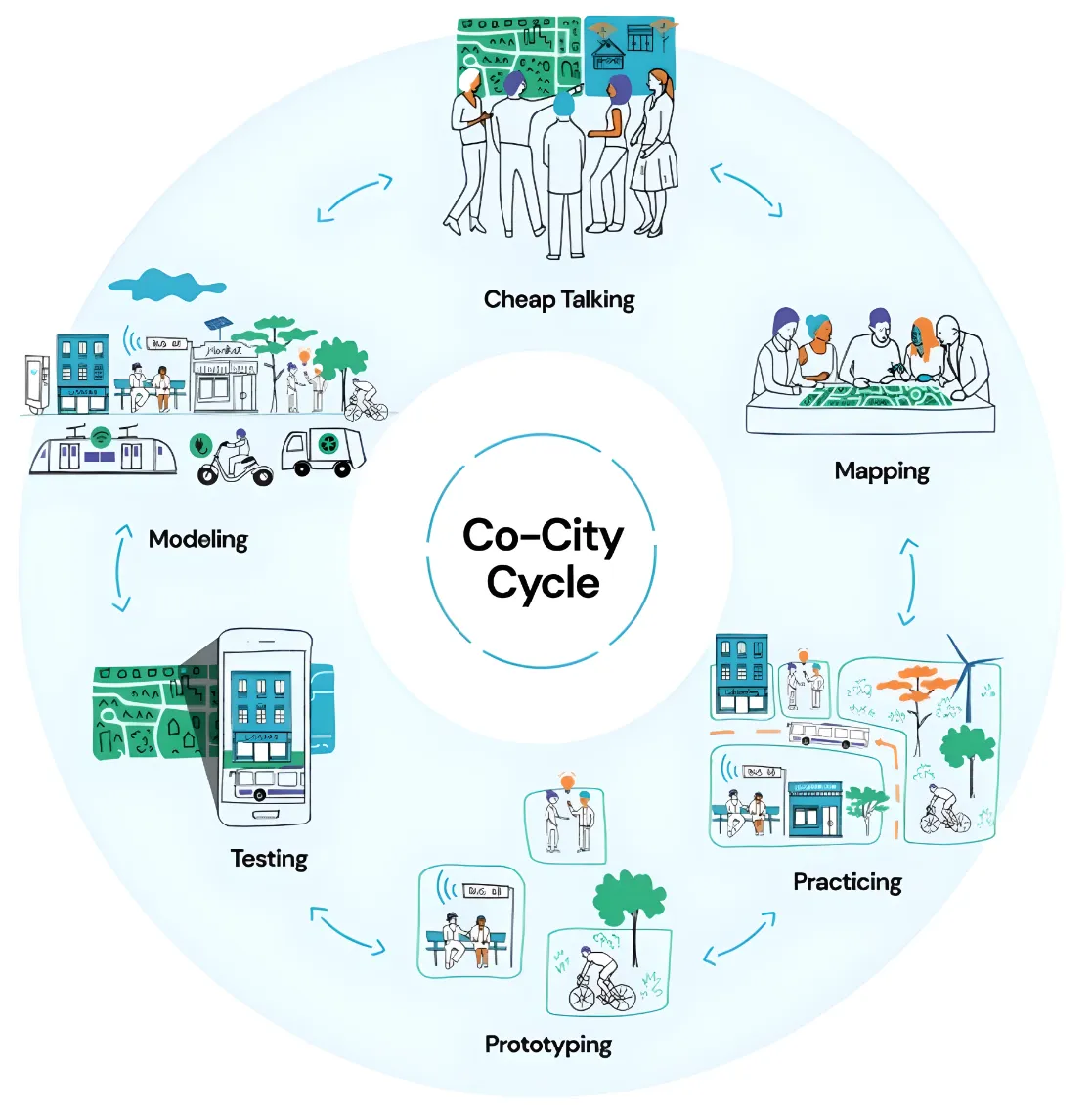
The Co‑City process, or co‑creation cycle, is an adaptive, practice‑based approach that LabGov applies in its projects to guide collaborative governance work. Rather than prescribing a fixed sequence, the cycle offers a flexible structure that communities can adapt as they build and refine shared stewardship of urban resources.
The cycle consists of six phases — Cheap Talking, Mapping, Practicing, Prototyping, Testing, and Modeling — which often overlap, repeat, or evolve depending on local context and community needs.
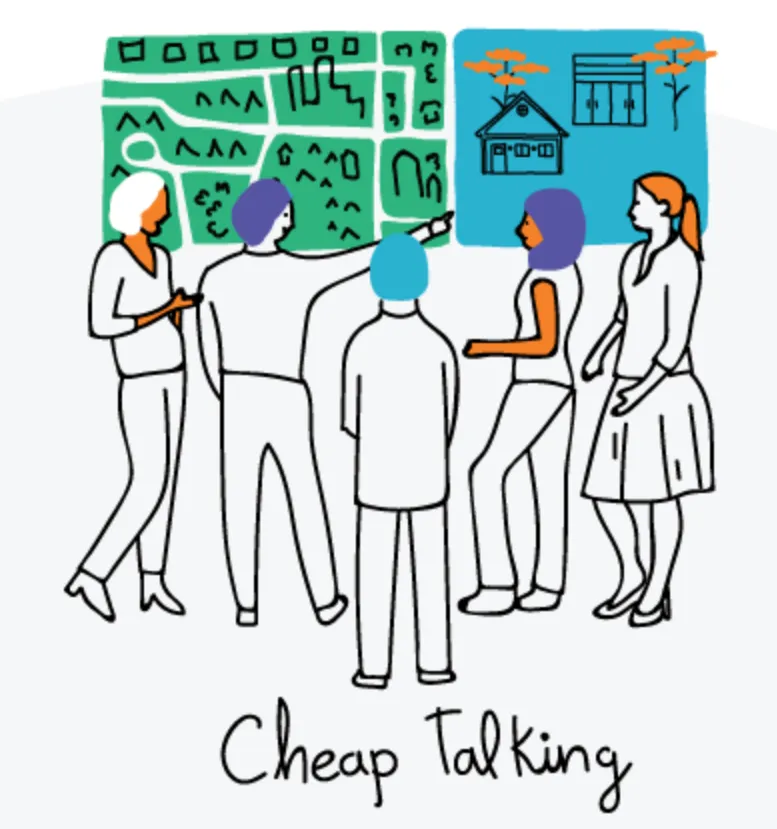
Cheap Talking, a concept that originated in game theory and later informed research on common‑pool resources, involves creating informal spaces for open discussion. In the context of co‑governance, this phase focuses on identifying existing or potential shared resources within a neighborhood or city district and building early relationships among local actors.
Cheap Talking fosters community engagement by encouraging dialogue with residents, practitioners, scholars, and other stakeholders. Listening closely to these voices helps surface local knowledge, clarify priorities, and lay the groundwork for collective action.
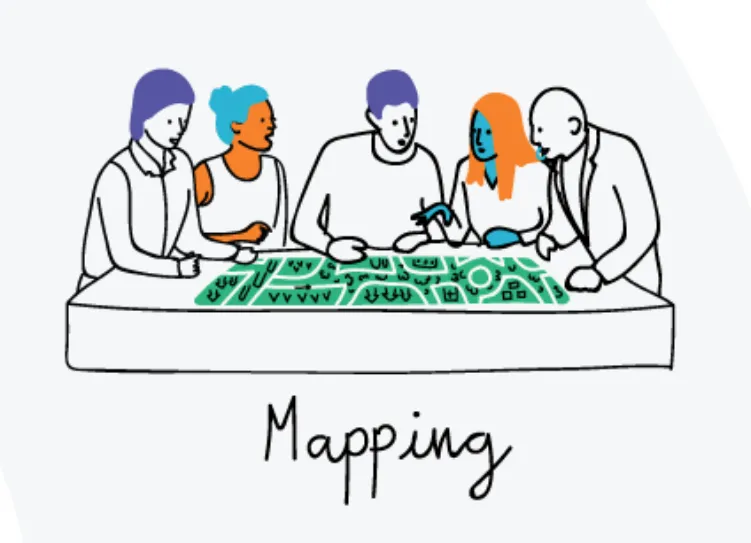
Mapping builds on insights gathered during Cheap Talking and unfolds in two parallel directions: analog (offline) and digital (online or e‑mapping). This phase uses fieldwork and observation to identify potential locations for co‑governance and to understand how community assets, relationships, and practices are distributed across a neighborhood or district.
Mapping may involve ethnographic research, direct observation, exploratory interviews, and surveys — methods drawn from applied and experimental studies on collaborative governance. The goal is to visualize existing or emerging commons through civic initiatives, self‑organized efforts, and shared resources.
By revealing the specific characteristics of the local context, mapping helps planners and community partners understand where collaboration is already happening and where it could grow. These insights lay the groundwork for designing and prototyping appropriate governance tools in the next stages of the process.
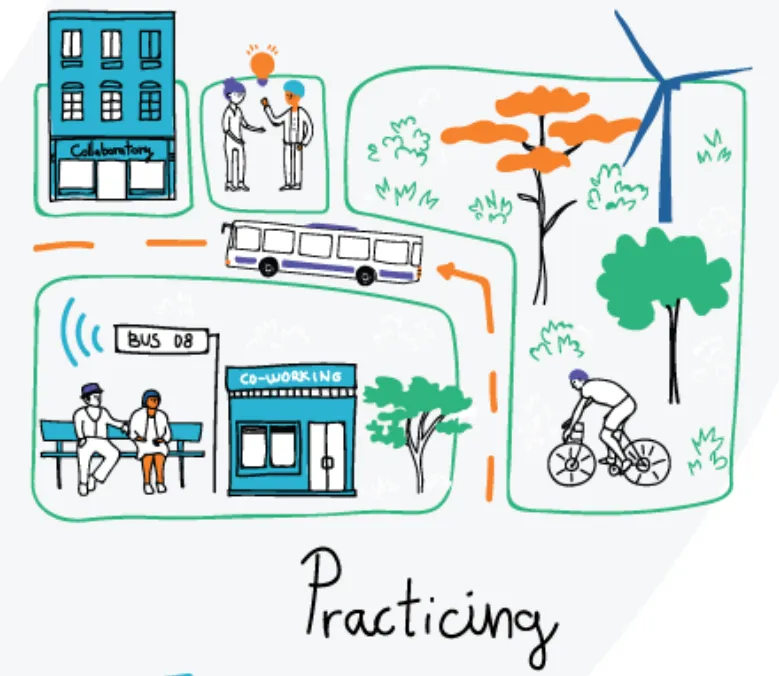
Practicing is an experimental phase centered around a “collaboration camp,” where emerging community‑driven projects begin to connect with local authorities and other institutional partners. During this stage, collaborative actors — including residents, social innovators, universities, nonprofits, enterprises, and public bodies — participate in co‑working sessions designed to identify synergies, align efforts, and explore opportunities for shared stewardship.
These sessions often culminate in a “collaboration day,” which may take the form of placemaking activities such as civic maintenance festivals, temporary activation of unused buildings, micro‑regeneration projects, creation of community gardens, or cultural programming. These real‑world activities serve as early tests that help refine ideas generated during the collaboration camp and demonstrate how collaboration can take shape on the ground.
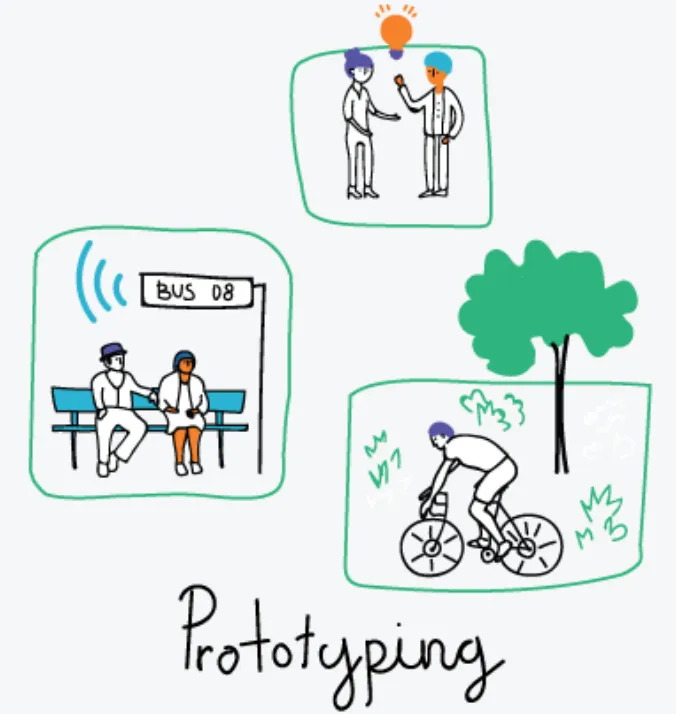
Prototyping centers on governance innovation. In this phase, participants and policymakers reflect on insights from the mapping and practicing stages to identify the specific needs, priorities, and characteristics of the community. With this shared understanding, they begin co‑designing — and in some cases piloting — governance or policy solutions that can support collaborative stewardship.
The aim is to build trust among community members and external stakeholders while creating pathways for co‑design supported by expert professionals. These pathways help guide and sustain self‑organization processes, ultimately leading to the development of governance models tailored to local conditions and capable of supporting co‑governance.
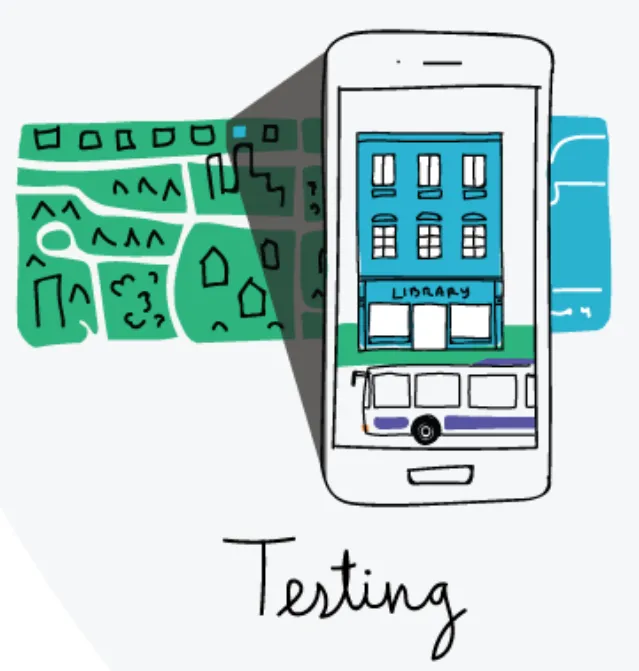
Testing involves implementing the governance or policy prototype and monitoring how it performs in practice. Evaluation draws on both qualitative and quantitative methods to assess whether the prototype aligns with the principles and objectives developed earlier in the process. These assessment tools must be adapted to the specific local context and to the characteristics of the co‑governance model being applied, rather than copied or transferred uncritically.
Through this iterative evaluation, communities and institutions gain insight into what works, what needs adjustment, and how the prototype can evolve to better support shared stewardship.
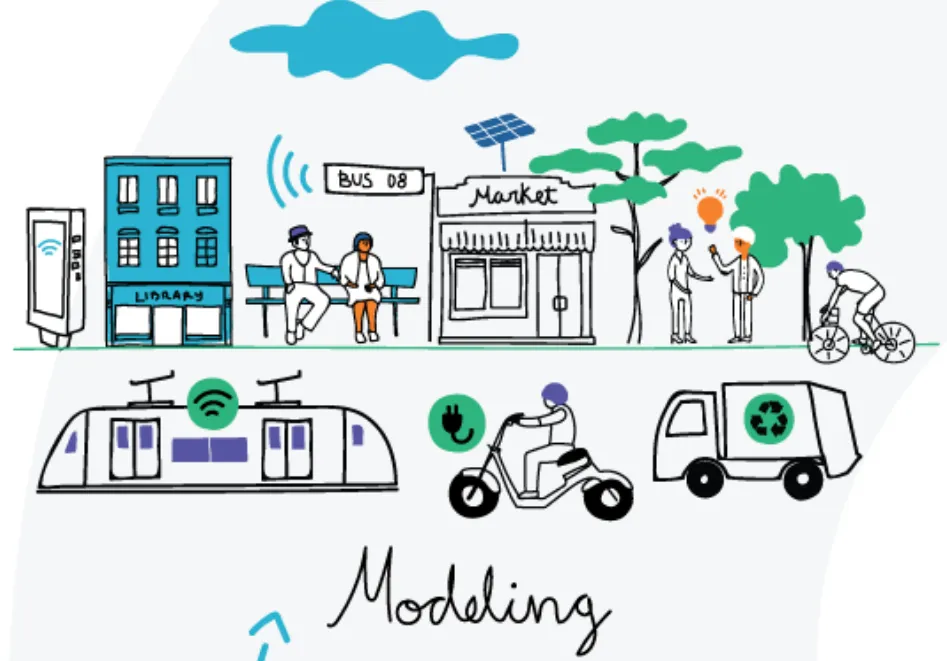
Modeling focuses on adapting the governance prototype to the legal, administrative, and institutional framework of the city so it can operate within — and contribute to — the broader urban ecosystem. This phase involves studying relevant regulations and administrative procedures, as well as engaging in dialogue with civil servants and policymakers to understand how the prototype fits within existing structures.
As an experimental phase, modeling may require temporarily suspending certain rules, modifying bureaucratic procedures, or drafting new policies, some of which may include sunset clauses or scheduled re‑evaluation. It can also lead to the creation of internal or external offices, support units, or enabling infrastructure that help sustain the prototype and promote co‑governance across the city.